Meta's Glasses and Chatbots
Five Cyber Stories - June 7, 2026 - Issue 011
Welcome to the first Sunday in June, 2026 and the eleventh issue of Five Cyber Stories. I hope your summer is off to a great start. For this week's newsletter, I'm sharing stories about potential facial recognition, all too helpful AI chatbots, and more.
Before we jump in, here's a quick link to subscribe if this newsletter was shared with you.
Here...we...go.
What Meta can — and can't — do ($)
Reporting from Wired's Dhruv Mehrotra and Dell Cameron
What Meta can see: Reportedly ($), Meta, the company behind Facebook, Instagram, and WhatsApp, has included code in some of its apps that could potentially allow Meta AI Glasses users to utilize facial recognition via a feature dubbed "Name Tag." It's important to note that "the feature is not yet exposed to consumers but seems nearly ready to go," according to security researcher Cooper Quintin ($) at the Electronic Frontier Foundation's Threat lab. Wired confirmed their findings with Quintin and another security researcher who is named by the pseudonym Buchodi. Also of note, Meta spokesman Andy Stone criticized the order in which Mehrotra and Cameron ($) shared certain details in the article, but said nothing about the substance of the reporting itself.
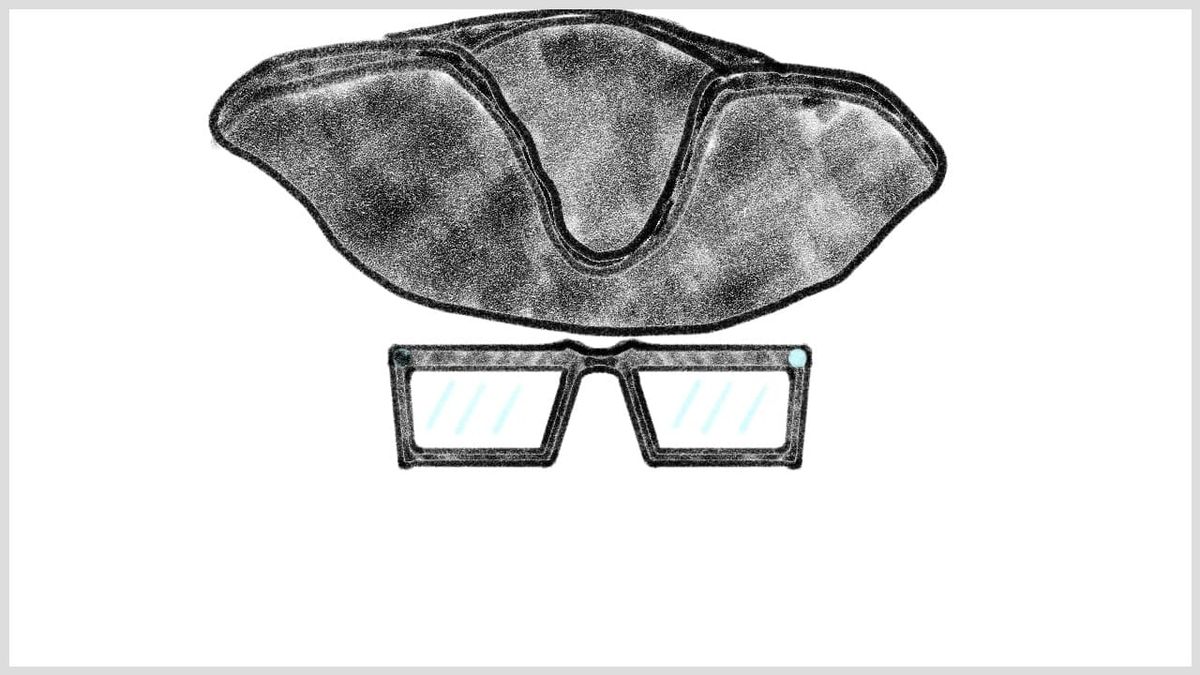
What Meta can do: When it comes to surveillance tech and digital privacy, I'm often reminded of the (fictional) philosopher pirate Jack Sparrow who says, "The only rules that really matter are these: what a man can do and what a man can't do."

In the case of Meta's facial recognition, I've previously written about what the company's ($) tech can do ($). As tech journalists continue to report on the capabilities and consequences of Meta’s burgeoning tech, the company says ($), "...we are not building a central face database." This reporting doesn't say they will build it, but it shows they very likely can.
Meanwhile, tech journalist Joanna Stern published reporting this week that explores the cottage industry disabling Meta AI Glasses' recording indicator lights. It’s not hard to imagine how facial recognition capabilities combined with people with skills to disable the safety features that do exist could have pretty profound consequences.
Shoutout to The Verge's Stevie Bonifield for sharing this video.
Stern does mention a few of the more legitimate reasons users may want to disable the light. (I for one can think of a few illegitimate reasons.)
In this vein, let’s not forget the less recent reporting about Meta severing ties with Sama, a company they hired to perform "data annotation," after workers revealed they were seeing people having sex and other explicit material in the reviewed footage filmed using Meta AI Glasses. Meta told the BBC that they stopped working with Sama "...because they don't meet our standards." Sama and others dispute Meta's given reason for the relationship ending.
So, to go back to the dichotomy posed by Mr. Sparrow, there is a growing list of examples outlining what Meta’s glasses can do. Meanwhile, there are few rules really limiting what it can’t do, at least when it comes to personal privacy. (Though for our loyal readers, you know I’ve written previously about my conviction that we need a rigorously debated national digital privacy law.) For now, I fear that we all will be at the mercy of what Meta and other tech companies can do.
Hacker support
Reporting from 404 Media's Jason Koebler
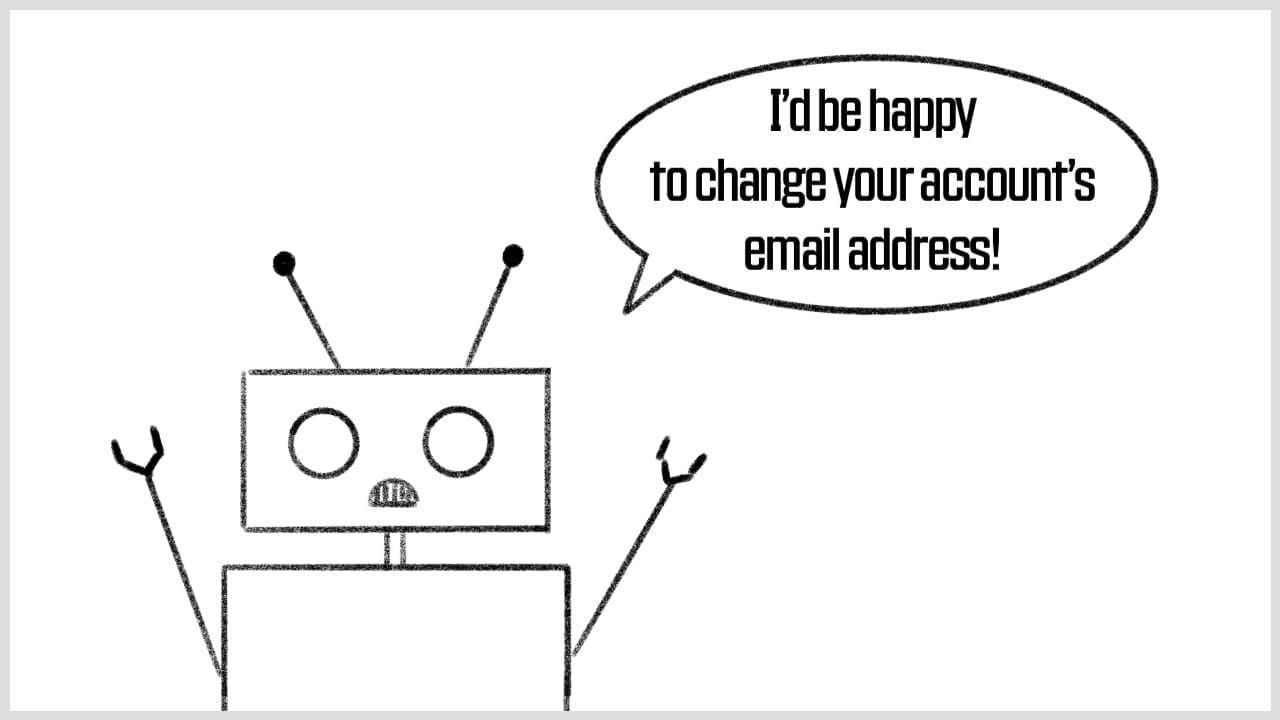
Just say please: This week, 404 Media was one of the first to report on Instagram accounts being hacked with the help of Meta's "AI support chatbot." Bad actors could use a VPN to match the victim's location, and the chatbot would update the Instagram page's associated account's email address upon request. From there, the bad actors could control the stolen account. The list of victims includes the U.S. Space Force Chief Master Sergeant, the Obama White House account (Meta disputes this), Sephora's, and security researcher Jane Manchun Wong. Brian Krebs from KrebsonSecurity reports that some of the compromised accounts posted "pro-Iranian images and messages" after being compromised.
Super helpful: While it seems the chatbot was incredibly helpful, it just so happens to have helped the wrong people. I've written about security issues with AI chat bots before, but this example is particularly stark. Ironically, while some AI models are feared for their prowess in finding software bugs, this chatbot was in itself a vulnerability.
There are two important takeaways from this story. Security with AI systems will likely be choppy even for those not vibe-coding, meaning basic personal security practices are still as important as ever. Though Meta claimed on Monday to have fixed the issue, TechCrunch's Lorenzo Franceschi-Bicchierai reported that there are still users claiming to have been "hacked" as of Tuesday. Notably, accounts "even using the least robust form of [multi-factor authentication (MFA)]" were probably immune from the hack.
Super worms
Reporting from The New York Times's Cade Metz
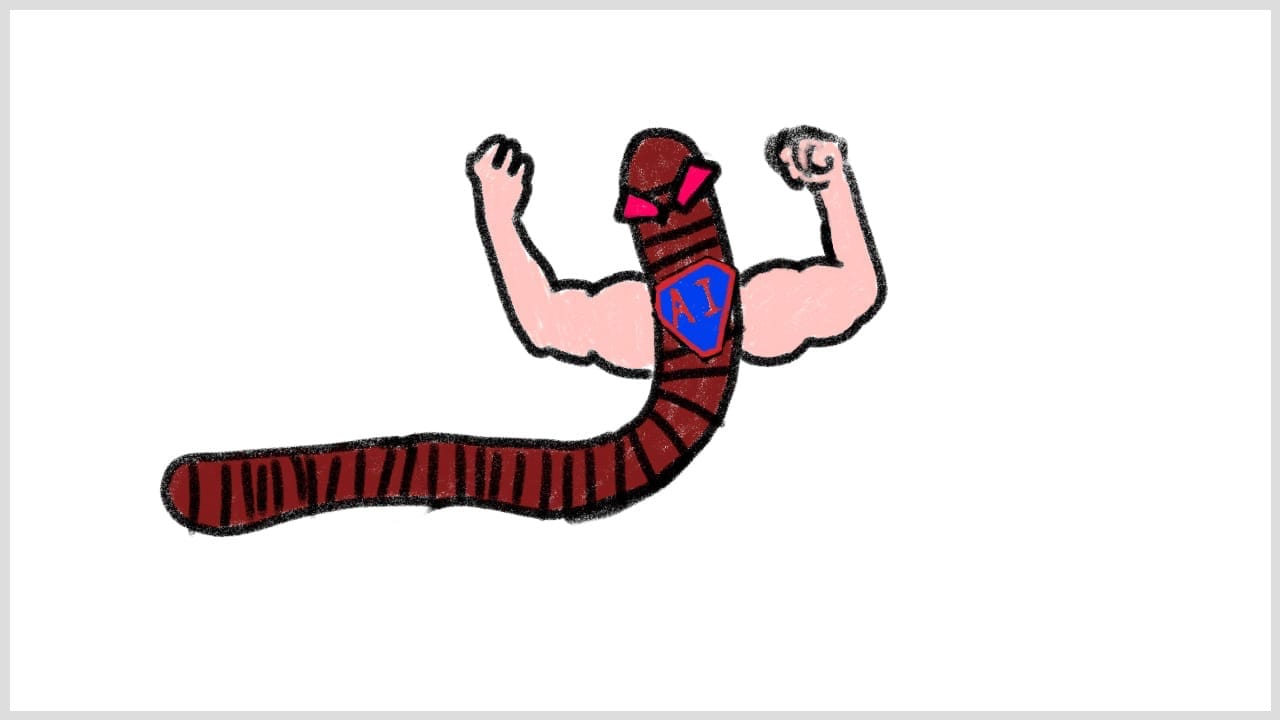
Adapts and overcomes: Researchers at the University of Toronto have published a paper detailing how they utilized A.I. to create a new variety of worm type malware which can use "any known flaw" to infect computer networks even across the internet. Fortunately for us, the researchers have kept the malware in a controlled environment. Professor Nicholas Papernot, one of the paper's authors, told The New York Times' Cade Metz that "You have to have a perfectly secure system to defend against this — and we know that is not currently feasible." The A.I. models used to create this super worm are known as open source models, and that means that there are no constraints on how these models are used. It's partly for this reason that the researchers are not fully disclosing how to create this new malware. What's more, this new worm can autonomously and logically work its way through how to compromise targeted networks.
A grain (or two) of salt: Metz's reporting does offer some caveats. Dan Lahav, C.E.O. of a "Frontier AI Security" company called Irregular told, the Times, "There is usually a meaningful gap between what you can create in lab conditions and what you can pull off in the world to create significant damage."
Still, as I've written previously, I believe those most at risk from these types of A.I. powered cyberattacks are those with little to no cyber defenses such as small businesses, local banks, and schools. Alternatively, I can imagine these new A.I. powered worms designed to attack one specific target, not just let loose to find any possible flaw. Worms hold a special place in my cyber-security fixation going all the way back to the infamous Stuxnet ($). Personally, it's alarming how powerful malware like Stuxnet may have been even more powerful if it were empowered by the same open source A.I. systems.
And it seems I may not be the only one. Anthropic announced this week that it was opening up its Project Glasswing to include "approximately 150 [more] organizations in 15 countries,..." in an effort to provide more capabilities to those responsible for cybersecurity related to various forms of critical infrastructure.
Professor David Lie who reviewed the University of Toronto research paper told the N.Y.T., "Ultimately, broader distribution — so that people can use the technology to fix vulnerabilities — is the way to go."
The case for a strong password manager
Reporting from Ars Technica's Dan Goodin and TechCrunch's Zack Whittaker
Bad news, good news: On Tuesday, TechCrunch's Zack Whittaker reported that Dashlane, a password manager, revealed it had suffered a breach that allowed bad actors to steal 20 customers' data. The good news as reported by Dan Goodin later in the week is that all of the data is almost certainly heavily encrypted, which will make it harder for the hackers to expose the said 20 customers' passwords. Dashlane has notified all affected customers hopefully giving them time to reset their passwords.
The verdict: I'll admit I was nervous seeing these headlines. Password managers are one of the most common security tools I promote to friends and family, and I worried this story could signal that these tools were no longer safe. Instead, I would count this a win for password managers. Yes, Dashlane will likely want to shore up the vulnerabilities that enabled this attack, but the 20 customers affected have been warned and likely have time to reset their passwords. Even with the extra precautions, the chances are slim that the hackers are able to crack the encryption on the stolen password vaults.
Passwords stored in a note, document or other plain text file would not have stayed hidden. So, if you're reading this and have yet to start using a password manager, I highly recommend using one starting today. I prefer to utilize password managers that work well across any device, so I recommend 1Password. But if budget is an issue, Apple's native Passwords app and the Google Password Manager are great options.
Cybersecurity and world war mitigation
Reporting from Srsly Risky Biz's Tom Oren
Geopolitics, really?: Last week, N.A.T.O. held its cybersecurity conference, CyCon. Srsly Risky Biz's Tom Oren attended and wrote about what he learned. One of his big takeaways is that N.A.T.O., a defensive alliance, needs to be more offensive in its responses to Russia's cyber aggression.
Russian cyber operations, however, are continuous and conducted well below the threshold of armed conflict. Individual operations just aren't damaging enough to attract a robust response. These continuous aggressive incursions are favoured by states like Russia and China as a way to harass their adversaries during peacetime.
Oren writes that N.A.T.O.'s current defensive posture falls short of the recommended American response known in part as "Persistent Engagement", which seeks to proactively eliminate cyber threats before they attack. N.A.T.O. is looking to change that. There are talks about utilizing "'hunt forward operations' (HFOs)" to remove threats from allied members' networks and such.
Geopolitics. Really: For most everyday people, I think the term "cybersecurity" feels far removed from concepts such as world wars and geopolitics. Most of this week's newsletter is focused on seemingly consumer aspects of privacy and cybersecurity. But it's stories like this that serve as another reminder that the same tools that threaten our personal safety are also just as relevant to the theaters of war and movements of nations. I've written about calls to consider ransomware attacks as terrorism and even related deaths to these attacks to be counted as homicides. I've also written about polling that citizens of N.A.T.O. countries largely believe we should consider cyber attacks as acts of war. And it’s not just abstractions. China's hackers are preparing for a potential conflict over Taiwan, and the U.S. used a cyberattack to turn off the lights in Caracas during the operation to capture Venezuelan president Nicolás Maduro.
It’s easy to miss this forest through the cybersecurity trees, but cyberthreats can be more than just an inconvenience. They can be a threat to national security and peace writ large.
Wrap Up:
Before I go, here's a few more interesting reads for your Sunday afternoon, many of them related to stories I've written about in previous issues:
- "China Aims A.I. at Predicting Who Could Pose a Political Risk" from The New York Times' Julian E. Barnes
- "Microsoft says it will not pursue security researchers after zero-day backlash" from The Record's Alexander Martin
- "NSA said to be readying Anthropic's Mythos for use in cyber operations" from TechCrunch's Zack Whittaker
- "Trump considers Palantir exec to lead CISA" from The Record's Martin Matishak
Thanks as always for reading, and I will see you next week with five more cyber stories.
Danny